CASTonCAST
Shells from Stackable Components
CASTonCAST is an ongoing research project initiated in 2010 at the Architectural Association in London by Povilas Cepaitis, Diego Ordoñez, Carlos Piles and Lluís Enrique during the Design Research Laboratory (DRL) Master programme.
The initial research developed a system composed of two complementary parts: a fabrication method based on the stacked production of curved building components, and a geometric method for the generation of double-curved surfaces from stackable components. These were demonstrated through a series of proof-of-concept plaster models as well as digital studies. The project was awarded by the Holcim Foundation for Sustainable Construction with the 1st Next Generation Award and the 3rd Global Innovation Award.
Following the Master programme, Lluís Enrique continued the research at ETH Zurich, supported by a LaCaixa grant, where the work progressively investigated the integration of structural considerations into the system for the design and production of shell structures from stackable components.
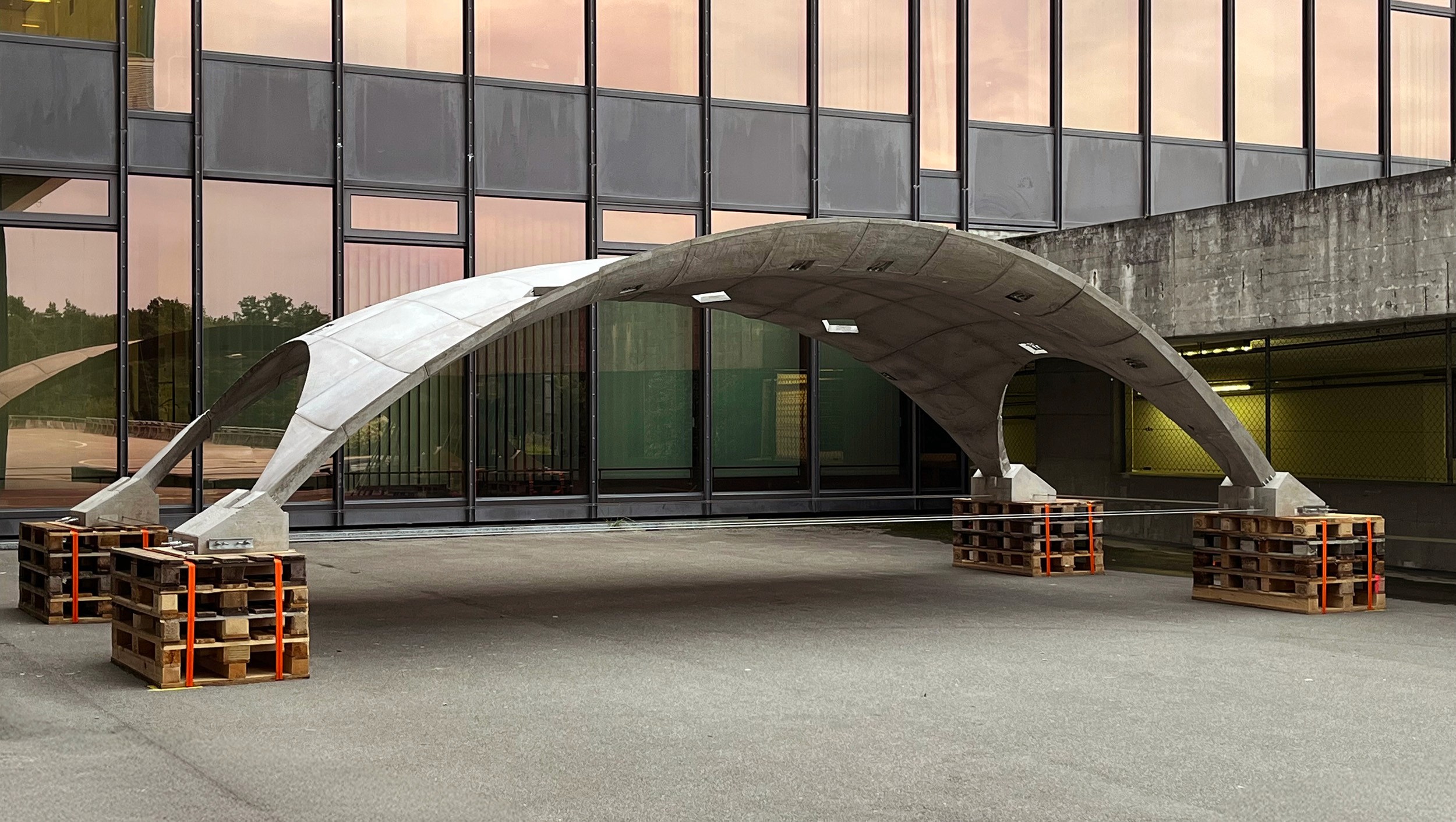
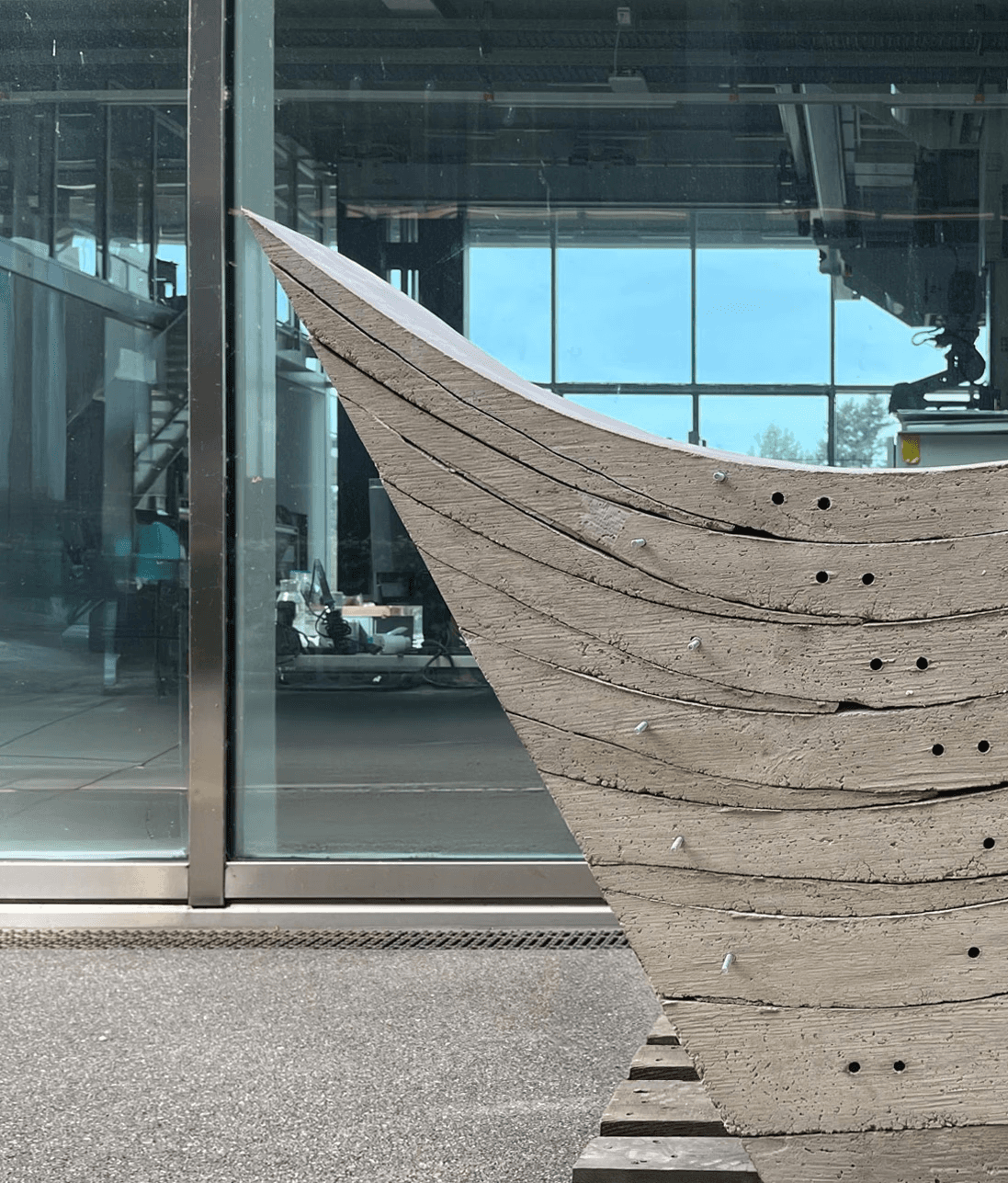
Over the past fifteen years, the project has developed through a series of physical prototypes within a research-by-design approach, including a small-scale post-tensioned concrete shell (2014–2015) presented at Advances in Architectural Geometry 2016, a 5.5-metre-span post-tensioned arch–cable structure (2017–2018), and an 7.5-metre-span shell prototype inspired by Heinz Isler’s tennis hall shells (images above), completed between 2020 and 2023.
The development and construction of the CASTonCAST concrete prototypes at ETH Zurich was made possible with the support of Holcim, Doka, Jakob and Liaver, who contributed cement, scaffolding support, cables and anchorages, and lightweight aggregates respectively.
castoncast@gmail.com
Photos © Lluís Enrique
CASTonCAST is an ongoing research project initiated in 2010 at the Architectural Association in London by Povilas Cepaitis, Diego Ordoñez, Carlos Piles and Lluís Enrique during the Design Research Laboratory (DRL) Master programme.
The initial research developed a system composed of two complementary parts: a fabrication method based on the stacked production of curved building components, and a geometric method for the generation of double-curved surfaces from stackable components. These were demonstrated through a series of proof-of-concept plaster models as well as digital studies. The project was awarded by the Holcim Foundation for Sustainable Construction with the 1st Next Generation Award and the 3rd Global Innovation Award.
Following the Master programme, Lluís Enrique continued the research at ETH Zurich, supported by a LaCaixa grant, where the work progressively investigated the integration of structural considerations into the system for the design and production of shell structures from stackable components.
Over the past fifteen years, the project has developed through a series of physical prototypes within a research-by-design approach, including a small-scale post-tensioned concrete shell (2014–2015) presented at Advances in Architectural Geometry 2016, a 5.5-metre-span post-tensioned arch–cable structure (2017–2018), and an 7.5-metre-span shell prototype inspired by Heinz Isler’s tennis hall shells (images above), completed between 2020 and 2023.
The development and construction of the CASTonCAST concrete prototypes at ETH Zurich was made possible with the support of Holcim, Doka, Jakob and Liaver, who contributed cement, scaffolding support, cables and anchorages, and lightweight aggregates respectively.
castoncast@gmail.com
Photos © Lluís Enrique
CASTonCAST is an ongoing research project initiated in 2010 at the Architectural Association in London by Povilas Cepaitis, Diego Ordoñez, Carlos Piles and Lluís Enrique during the Design Research Laboratory (DRL) Master programme.
The initial research developed a system composed of two complementary parts: a fabrication method based on the stacked production of curved building components, and a geometric method for the generation of double-curved surfaces from stackable components. These were demonstrated through a series of proof-of-concept plaster models as well as digital studies. The project was awarded by the Holcim Foundation for Sustainable Construction with the 1st Next Generation Award and the 3rd Global Innovation Award.
Following the Master programme, Lluís Enrique continued the research at ETH Zurich, supported by a LaCaixa grant, where the work progressively investigated the integration of structural considerations into the system for the design and production of shell structures from stackable components.
Over the past fifteen years, the project has developed through a series of physical prototypes within a research-by-design approach, including a small-scale post-tensioned concrete shell (2014–2015) presented at Advances in Architectural Geometry 2016, a 5.5-metre-span post-tensioned arch–cable structure (2017–2018), and an 7.5-metre-span shell prototype inspired by Heinz Isler’s tennis hall shells (images above), completed between 2020 and 2023.
The development and construction of the CASTonCAST concrete prototypes at ETH Zurich was made possible with the support of Holcim, Doka, Jakob and Liaver, who contributed cement, scaffolding support, cables and anchorages, and lightweight aggregates respectively.
castoncast@gmail.com
Photos © Lluís Enrique